


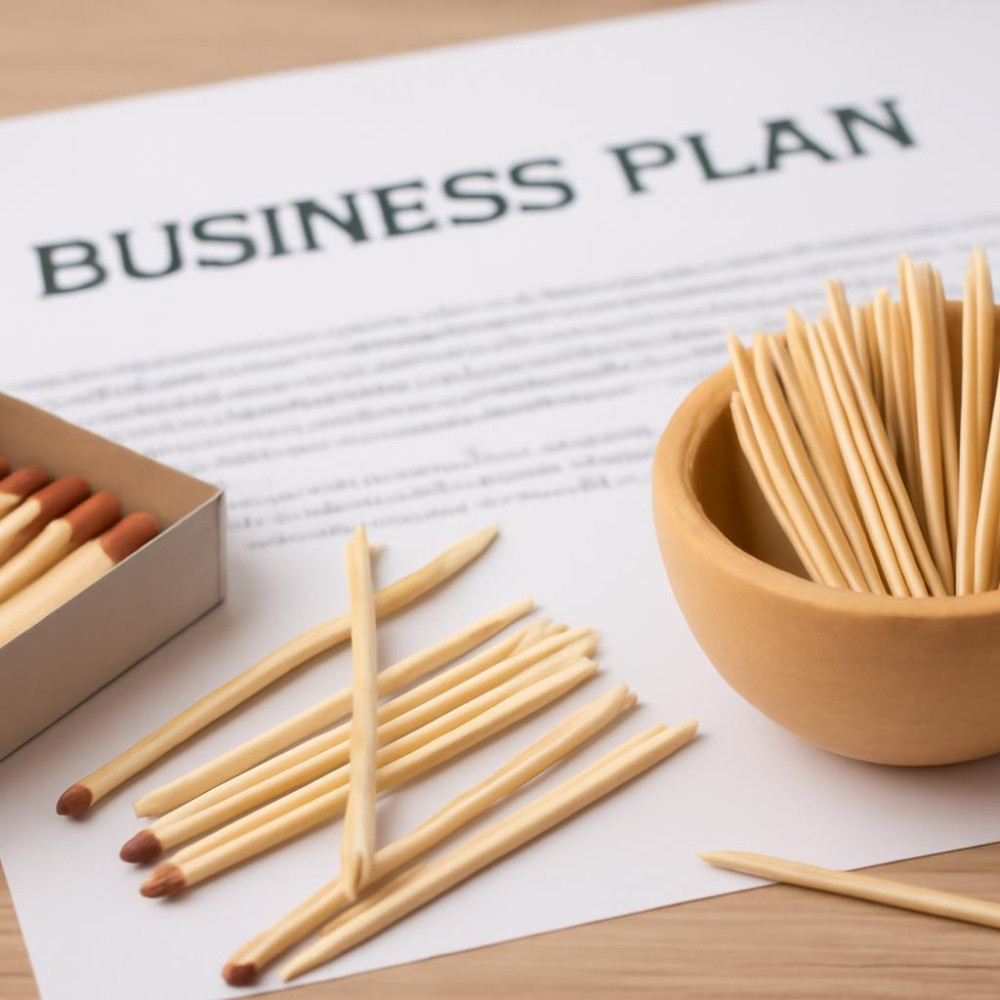
When exploring a small-scale manufacturing venture, toothpicks and matchsticks represent a compact yet potentially steady opportunity. A well-considered business plan helps clarify the path from concept to sustainable operation, especially for students, researchers, and small businesses seeking a practical model.
Understanding the Opportunity
Toothpicks and matchsticks sit at the intersection of simple materials and consumer demand for everyday items. The core idea is to establish a compact manufacturing line that can produce both products efficiently. A focused plan should address product quality, regulatory requirements, cost control, and reliable distribution channels. While market data can vary by region, a practical plan emphasises scalable processes and prudent investment.
Product and Process Overview
A basic production setup may involve two adjacent streams: toothpicks and matchsticks. The toothpick stream requires wood preparation, cutting, shaping, and finishing. The matchstick stream involves wood preparation, tip coating, and stick assembly. In practice, equipment selection should balance initial capital with expected throughput. It is important to note that quality control procedures influence consumer satisfaction and repeat purchases. Staff training, maintenance routines, and standard operating procedures underpin consistent output.
Sourcing and Materials
Raw materials include suitable wood, adhesives or coatings, and packaging. Sourcing considerations should cover supplier reliability, lead times, and the availability of waste wood or offcuts which can reduce input costs. A responsible procurement approach also accounts for sustainability practices and compliance with local regulations on forest products. Building relationships with a small number of trusted suppliers often improves consistency.
Manufacturing Layout and Flow
A compact facility benefits from a logical flow: raw wood intake, processing, shaping or coating, quality control, and packaging. Energy efficiency and waste minimisation are practical priorities. Safety considerations should not be overlooked; clear signage, machine guarding where appropriate, and staff training contribute to a safer working environment. Delegation of routine maintenance tasks helps maintain uptime and product quality.
Quality and Compliance
Quality control helps establish product consistency. Simple checks at different stages—dimensions, finish, and packaging integrity—can catch defects early. Depending on regional rules, there may be specific packaging and labeling requirements or safety certifications to consider. The plan should acknowledge these limits and propose a plan for compliance without making overreaching commitments before testing the market.
Market and Distribution Basics
Think about who buys toothpicks and matchsticks: households, catering, hospitality, and craft suppliers are common customer segments. A practical approach concentrates on building relationships with local retailers, wholesalers, or e-commerce platforms. Pricing should cover material costs, labour, energy, maintenance, and a modest margin for growth. It is prudent to pilot with a small, controllable set of accounts before scaling.
Financial Considerations and Risk Management
A straightforward financial plan models capital expenditure, operating costs, and projected sales. Include a conservative forecast for early months, with a clear break-even target and a plan for handling cash flow gaps. Consider the impact of price volatility in raw materials and potential demand fluctuations. It is wise to identify non-financial risks such as supply interruptions or equipment downtime and to draft contingency measures.
Operations and Growth Path
Starting with a lean operation allows space to learn and adjust. As the business gains traction, you may explore process optimisations, additional product variants, or expanded distribution. The plan should outline a scalable pathway, with milestones for equipment upgrades, production capacity, and new channels. Keep in mind limitations: capital constraints, market uncertainty, and the need for ongoing quality assurance.
Leveraging ProjectShelve Resources
The ProjectShelve platform features a dedicated business plan resource for a toothpick and matchstick manufacturing venture. Access to a detailed plan can provide a practical backbone for your own preparation and evaluation. Remember to adapt any template to your local context and verify current regulatory expectations before proceeding. The marker TOOTHPICK AND MATCHSTICK MANUFACTURING BUSINESS PLAN will be replaced with the verified project link in the final deployment.
Practical Tips for Startups
- Start small: validate demand with a modest production run before expanding capacity.
- Build supplier relationships early to stabilise costs and lead times.
- Maintain simple, clear documentation for all processes to support training and compliance.
- Seek feedback from early customers to refine packaging and presentation.
- Budget for maintenance and consumables alongside capital costs.
Limitations and Realistic Expectations
This guide focuses on practical, broadly applicable guidance rather than region-specific legal advice. Regulations differ by country and sometimes by municipality. Always corroborate product safety, packaging, and waste disposal requirements with local authorities. A compact operation may face limited economies of scale; a clear growth plan helps manage this risk while retaining flexibility.
Closing Thoughts
A toothpick and matchstick manufacturing venture can be a feasible small-business project with careful planning, disciplined execution, and a focus on quality and reliability. Use the plan as a living document that evolves with experience, market feedback, and changing conditions. The aim is not perfection at launch but a steady path toward sustainable operation and responsible growth.
#projectshelve #smallbizplanning #manufacturing #businessplan #sustainablebusiness #academicresearch